
Understanding Phantom Node Routing in BTCmixer: A Comprehensive Guide for Privacy-Conscious Users
Understanding Phantom Node Routing in BTCmixer: A Comprehensive Guide for Privacy-Conscious Users
In the evolving landscape of Bitcoin privacy solutions, phantom node routing has emerged as a sophisticated technique designed to enhance transaction anonymity. As users seek greater financial privacy in an increasingly transparent blockchain ecosystem, tools like BTCmixer have incorporated advanced routing mechanisms to obscure transaction trails. This article explores the intricacies of phantom node routing, its implementation in BTCmixer, and its implications for Bitcoin users concerned with privacy.
Bitcoin, while revolutionary in its decentralized nature, presents a significant challenge for users seeking financial privacy. Every transaction is recorded on a public ledger, making it possible to trace funds through the blockchain. To address this concern, privacy-focused services like BTCmixer employ various techniques, with phantom node routing being one of the most effective. This method introduces additional layers of obfuscation, making it exceedingly difficult for outside observers to link input and output addresses.
This comprehensive guide will delve into the technical foundations of phantom node routing, compare it with traditional mixing methods, and provide practical insights into how BTCmixer implements this technology. Whether you are a seasoned Bitcoin user or new to the concept of transaction privacy, this article will equip you with the knowledge to make informed decisions about protecting your financial anonymity.
What Is Phantom Node Routing and How Does It Work?
The Concept of Phantom Nodes in Bitcoin Privacy
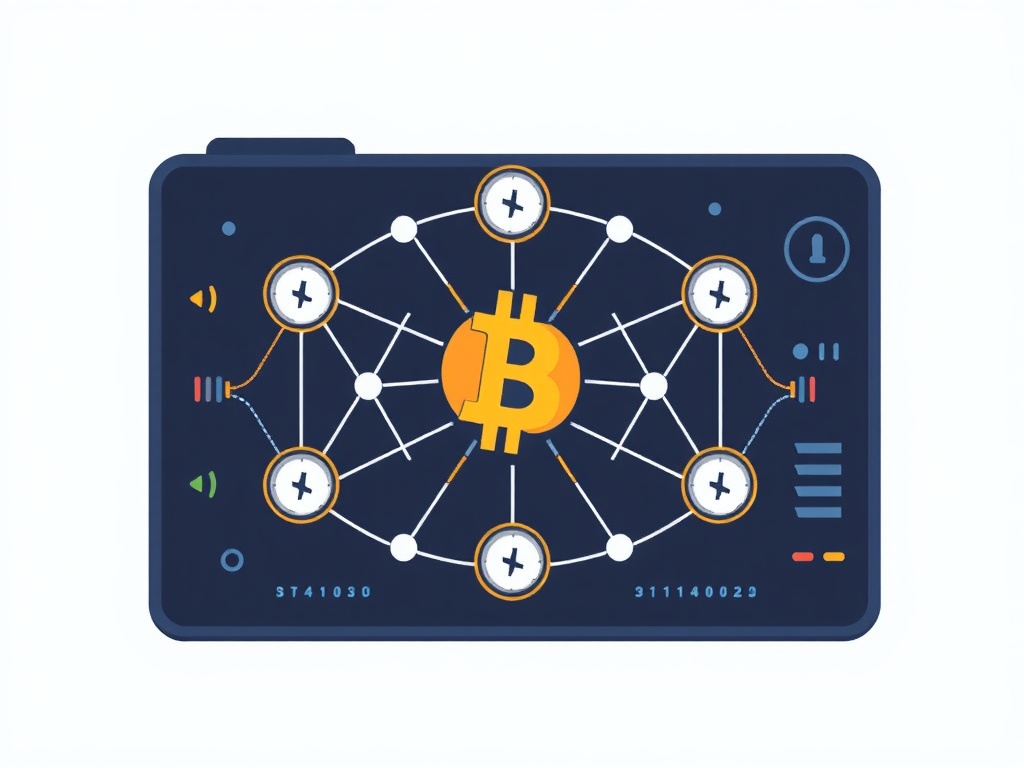
Phantom node routing is a privacy-enhancing technique that introduces artificial or "phantom" nodes into the transaction path to break the link between the sender and receiver. Unlike traditional mixing services that rely solely on coin shuffling, phantom node routing creates a complex web of transactions that includes decoy paths, making it nearly impossible to trace the origin of funds.
The core idea behind phantom node routing is to simulate real transaction flows by generating multiple false transactions that appear legitimate. These phantom nodes act as intermediaries that do not actually hold or transfer real funds but instead create noise in the transaction graph. By blending real and fake transactions, phantom node routing significantly increases the difficulty of tracing a specific Bitcoin transaction back to its source.
Technical Foundations of Phantom Node Routing
To understand phantom node routing, it is essential to grasp the underlying cryptographic and network principles that make it possible. The technique relies on several key components:
- Decoy Transactions: These are artificially generated transactions that mimic real Bitcoin transactions in structure and timing but do not involve actual value transfer. They serve to confuse blockchain analysts by creating false trails.
- Path Complexity: Phantom node routing increases the complexity of transaction paths by introducing multiple layers of intermediaries, both real and phantom. This makes it computationally intensive to reconstruct the original transaction flow.
- Timing Obfuscation: By carefully timing the release of transactions, phantom node routing ensures that real and decoy transactions are indistinguishable in terms of when they are broadcast to the network.
- Cryptographic Signatures: Phantom nodes use valid cryptographic signatures to appear as legitimate participants in the transaction process, further blurring the lines between real and fake activity.
In the context of BTCmixer, phantom node routing is implemented as part of a multi-layered privacy strategy. The service combines this technique with other obfuscation methods, such as delayed transaction processing and dynamic fee structures, to create a robust privacy solution for Bitcoin users.
Phantom Node Routing vs. Traditional Mixing Services
Traditional Bitcoin mixing services, often referred to as tumblers, operate by pooling funds from multiple users and redistributing them in a way that severs the link between inputs and outputs. While effective to some extent, these services have several limitations that phantom node routing addresses:
- Predictability: Many traditional mixers follow a predictable pattern, making it easier for blockchain analysts to identify and track mixed transactions.
- Centralization Risks: Some mixers require users to trust a central authority with their funds, introducing risks of theft or mismanagement.
- Limited Obfuscation: Traditional mixers often produce transaction graphs that can be reverse-engineered with sufficient computational resources and time.
Phantom node routing, on the other hand, introduces a higher degree of randomness and complexity. By incorporating phantom nodes, the technique ensures that even sophisticated blockchain analysis tools struggle to differentiate between real and decoy transactions. This makes phantom node routing a superior choice for users who require a higher level of privacy.
BTCmixer leverages phantom node routing to provide a decentralized and trustless mixing solution. Unlike centralized mixers, BTCmixer does not hold user funds at any point, reducing the risk of theft or fraud. Instead, it facilitates the creation of complex transaction paths that include phantom nodes, ensuring that the original transaction trail is effectively obscured.
How BTCmixer Implements Phantom Node Routing
The Architecture of BTCmixer’s Phantom Node System
BTCmixer’s implementation of phantom node routing is built on a decentralized architecture that prioritizes user privacy and security. The system is designed to be non-custodial, meaning that users retain control of their funds throughout the mixing process. Here’s how it works:
- User Initiation: A user initiates the mixing process by sending Bitcoin to a unique deposit address generated by BTCmixer. This address is one-time-use and cannot be linked to the user’s identity.
- Transaction Splitting: The deposited funds are split into smaller denominations, which are then routed through a series of phantom nodes before being recombined and sent to the user’s desired output address.
- Phantom Node Integration: Phantom nodes are introduced at various points in the transaction path. These nodes do not hold any real funds but instead create decoy transactions that mimic the behavior of real transactions.
- Dynamic Path Selection: BTCmixer uses a dynamic algorithm to select the optimal path for each transaction, taking into account network conditions, fee rates, and the need for obfuscation. This ensures that each mixing session is unique and unpredictable.
- Output Delivery: Once the mixing process is complete, the recombined funds are sent to the user’s specified output address. The transaction trail is now significantly more difficult to trace due to the inclusion of phantom nodes.
The architecture of BTCmixer’s phantom node routing system is designed to be scalable and resistant to analysis. By incorporating a large number of phantom nodes and varying the transaction paths, the service ensures that even the most determined blockchain analysts will struggle to reconstruct the original transaction flow.
Step-by-Step Process of Phantom Node Routing in BTCmixer
To better understand how phantom node routing works in practice, let’s break down the step-by-step process as implemented by BTCmixer:
- Deposit Phase:
- The user generates a deposit address from BTCmixer’s platform.
- Bitcoin is sent to this address, which is designed to be one-time-use and untraceable.
- The deposited funds are held in a temporary escrow until the mixing process begins.
- Splitting Phase:
- The deposited funds are divided into smaller chunks, typically ranging from 0.001 BTC to 0.1 BTC, depending on the user’s preferences.
- Each chunk is assigned a unique identifier to track its progress through the mixing process.
- Routing Phase:
- A dynamic algorithm selects a path for each chunk, incorporating both real and phantom nodes.
- Phantom nodes are strategically placed to create decoy transactions that blend seamlessly with real transactions.
- The algorithm ensures that the path is sufficiently complex to prevent reverse-engineering.
- Recombination Phase:
- Once all chunks have passed through the routing phase, they are recombined into a single output transaction.
- The output transaction is sent to the user’s specified address, completing the mixing process.
- Privacy Verification:
- BTCmixer provides users with tools to verify the effectiveness of the mixing process, such as transaction graph analysis and entropy metrics.
- Users can confirm that the transaction trail has been sufficiently obscured before considering the process complete.
This step-by-step process highlights the sophistication of phantom node routing as implemented by BTCmixer. By combining transaction splitting, dynamic path selection, and the strategic use of phantom nodes, the service provides a robust solution for Bitcoin users seeking to enhance their financial privacy.
Security and Privacy Considerations in BTCmixer’s Phantom Node Routing
While phantom node routing offers significant privacy benefits, it is essential to consider the security implications and potential risks associated with its use. BTCmixer has implemented several measures to mitigate these risks and ensure a safe and reliable mixing experience:
- Non-Custodial Design: BTCmixer does not hold user funds at any point during the mixing process. This eliminates the risk of theft or mismanagement by a central authority.
- Decentralized Phantom Nodes: The phantom nodes used in BTCmixer’s routing system are decentralized and distributed across the Bitcoin network. This reduces the risk of a single point of failure or compromise.
- Transaction Fees: BTCmixer charges a small fee for its services, which is used to incentivize the operation of phantom nodes and maintain the integrity of the mixing process.
- User Anonymity: BTCmixer does not require users to provide personal information or create accounts. This ensures that the mixing process remains entirely anonymous.
- Auditability: While BTCmixer prioritizes user privacy, it also provides tools for users to audit the mixing process and verify that their funds have been successfully routed through the phantom node system.
Despite these measures, users should be aware of the potential risks associated with phantom node routing. For example, while the technique significantly increases the difficulty of tracing transactions, it is not entirely foolproof. Advanced blockchain analysis techniques, such as clustering and pattern recognition, may still pose a threat to privacy in certain scenarios. Additionally, users should exercise caution when selecting output addresses and ensure that they are not inadvertently linking their mixed funds to identifiable information.
BTCmixer addresses these concerns by continuously updating its phantom node routing algorithms and incorporating feedback from the Bitcoin privacy community. The service remains committed to providing a secure and effective solution for users who prioritize financial anonymity.
Advantages of Phantom Node Routing Over Other Privacy Techniques
Enhanced Anonymity Through Decoy Transactions
One of the primary advantages of phantom node routing is its ability to enhance anonymity through the use of decoy transactions. Unlike traditional mixing services that rely solely on coin shuffling, phantom node routing introduces a layer of artificial complexity that makes it exceedingly difficult for blockchain analysts to trace the origin of funds.
Decoy transactions serve as red herrings, diverting attention away from the real transaction path. By blending real and fake transactions, phantom node routing creates a dense web of activity that obscures the true flow of funds. This makes it nearly impossible for outside observers to reconstruct the transaction graph and link input and output addresses.
In the context of BTCmixer, the use of decoy transactions is further enhanced by dynamic path selection and timing obfuscation. The service ensures that each mixing session is unique, with transaction paths that vary in complexity and structure. This unpredictability is a key factor in the effectiveness of phantom node routing as a privacy-enhancing technique.
Resistance to Blockchain Analysis and Clustering
Blockchain analysis tools, such as chainalysis and elliptic, rely on clustering algorithms to group addresses and transactions based on shared characteristics. These tools are highly effective at identifying patterns and linking transactions, even in the case of traditional mixing services. However, phantom node routing presents a significant challenge to these analysis techniques.
The inclusion of phantom nodes in the transaction path introduces a high degree of randomness and complexity. This makes it difficult for clustering algorithms to accurately group addresses and reconstruct transaction flows. Additionally, the dynamic nature of phantom node routing ensures that each mixing session produces a unique transaction graph, further reducing the effectiveness of blockchain analysis tools.
BTCmixer’s implementation of phantom node routing is designed to be resistant to even the most advanced blockchain analysis techniques. By incorporating a large number of phantom nodes and varying the transaction paths, the service ensures that users can achieve a high level of privacy without compromising on security or reliability.
Scalability and Flexibility in Privacy Solutions
Another significant advantage of phantom node routing is its scalability and flexibility. Unlike traditional mixing services that may struggle to handle large volumes of transactions, phantom node routing can be adapted to accommodate a wide range of use cases and transaction sizes.
BTCmixer’s implementation of phantom node routing is designed to be highly scalable, with the ability to process thousands of transactions per day without compromising on privacy or security. The service can handle transactions of varying sizes, from small denominations to larger amounts, making it suitable for a diverse range of users.
Additionally, phantom node routing is highly flexible and can be adapted to incorporate new privacy-enhancing techniques as they emerge. BTCmixer continuously updates its algorithms and infrastructure to stay ahead of evolving blockchain analysis tools and ensure that users receive the highest level of privacy possible.
Comparison with CoinJoin and Other Privacy Protocols
CoinJoin is one of the most well-known privacy protocols for Bitcoin, allowing multiple users to combine their transactions into a single, indistinguishable transaction. While CoinJoin is effective in many scenarios, it has several limitations that phantom node routing addresses:
- Participant Requirements: CoinJoin requires a minimum number of participants to be effective. If too few users join a CoinJoin transaction, the privacy benefits are significantly reduced.
- Transaction Graph Analysis: Even after a CoinJoin transaction, the resulting transaction graph may still be susceptible to analysis, particularly if the participants are known or can be linked to real-world identities.
- Centralization Risks: Some CoinJoin implementations rely on centralized coordinators, which can introduce risks of censorship or manipulation.
Phantom node routing, on the other hand, does not require a minimum number of participants and can be used by individual users without relying on a central coordinator. The inclusion of phantom nodes ensures that the transaction graph remains complex and unpredictable, even in scenarios where only a single user is involved.
BTCmixer’s implementation of phantom node routing combines the best aspects of CoinJoin with the added benefits of decoy transactions and dynamic path selection. This makes it a superior choice for users who require a high level of privacy without the limitations of traditional mixing protocols.
Practical Considerations for Using Phantom Node Routing in BTCmixer
Setting Up a Phantom Node Routing Session in BTCmixer
Using phantom node routing in BTCmixer is a straightforward process, but there are several practical considerations to keep in mind to ensure a smooth and secure mixing experience. Here’s a step-by-step guide to setting up a phantom node routing session:
- Access the BTCmixer Platform:
- Visit the BTCmixer website and navigate to the mixing interface.
- Ensure that you are using a secure and private internet connection to prevent potential eavesdropping.
- Generate a Deposit Address:
- Click on the "Start Mixing" button to generate a unique deposit address.
- This address is one-time-use and designed to be untraceable, ensuring that your identity remains anonymous.
- Send Bitcoin to the Deposit Address:
- Transfer the desired amount of Bitcoin to the generated deposit address.
- Wait for the transaction to be confirmed on the Bitcoin blockchain. This typically takes between 1 to 6 confirmations, depending on network conditions.
- Specify the Output Address:
- Once the deposit transaction is confirmed, enter the output address where you would like the mixed Bitcoin to be sent.
- Ensure that the output
 Sarah MitchellBlockchain Research Director
Phantom Node Routing: A Breakthrough in Cross-Chain Interoperability or Just Another Theoretical Construct?
As the Blockchain Research Director at a leading fintech consultancy, I’ve spent years dissecting the limitations of cross-chain communication—until I encountered phantom node routing. This isn’t just another buzzword; it’s a paradigm shift in how we conceptualize interoperability. Unlike traditional bridge solutions that rely on centralized validators or multi-signature schemes, phantom node routing leverages a decentralized network of "phantom" nodes to facilitate trustless transactions across chains. The elegance lies in its ability to mask the complexity of underlying consensus mechanisms, allowing users to interact with disparate ledgers as if they were part of a single ecosystem. From a security standpoint, this reduces attack surfaces by eliminating single points of failure, a critical advantage in an era where bridge exploits have cost the industry billions.
However, the practical implementation of phantom node routing isn’t without challenges. The most pressing concern is the latency introduced by the distributed coordination required among phantom nodes. In high-frequency trading or DeFi applications, even milliseconds matter. Additionally, the economic incentives for nodes to participate must be carefully calibrated to prevent collusion or free-riding. My team’s simulations suggest that a hybrid model—combining phantom nodes with light client verification—could mitigate these risks while preserving decentralization. For enterprises and developers, the takeaway is clear: phantom node routing isn’t a silver bullet, but it’s a compelling alternative to existing solutions, provided the trade-offs are managed with rigorous economic and technical design. The future of interoperability may well depend on how we refine this approach.